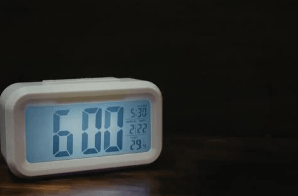
As your alarm goes off and morning rolls around again, you groan and hit snooze again. It’s 6 am on a random Tuesday, and you were up late studying for a huge test. Even though it feels like you were asleep for 15 minutes, you peel off the covers and get up for the day.
Adolescents require 8-10 hours of sleep per night. Most get shortened by 7 due to early school start times. A major benefit of later school start times would be more sleep. A study by the National Sleep Foundation reports that “…biological sleep patterns change when humans enter adolescence, causing teenagers to both wake up and fall asleep later,” as stated in the article “School Start Times.”
A shift in circadian rhythm makes it more difficult for youth to fall asleep earlier. This means that they can stay up later “before experiencing an increase in pressure to sleep,” as noted in an article from the American Psychological Association.
During the COVID-19 pandemic, which switched schools online, start times were pushed back. This means that “…adolescent students have reported feeling more refreshed, having more energy, and noticing improved mental clarity during lessons as a result of later school start times” (School Start Times). In fact, multiple skilled organizations, including the American Academy of Pediatrics, American Academy of Sleep Medicine, and the CDC, have pushed for start times after 8:30 A.M.
Sleep deprivation is a detrimental problem for adolescents. By not getting the right amount of sleep, “young people are more susceptible to illness, skin problems, and mental health issues, including depression and aggression” (School Start Times). Addictions to caffeine, nicotine, unhealthy foods, and alcohol can also arise from too little sleep.
Especially for student athletes, a study from the Journal of Pediatric Orthopaedics reveals that when compared to those who received sufficient sleep, student athletes who did not sleep more than 8 hours each night were “1.7 times more likely to experience a sports injury.”
Additionally, sleep-deprived drivers are more likely to become distracted or even unconscious behind the wheel. Research has shown that inadequate sleep is associated with a high rate of car accidents from dawn to dusk. As well, “Research has also suggested that insufficient sleep affects the part of the brain responsible for impulse control; sleep deprivation increases the risk behaviors in adolescents.” Some of these include distracted driving, substance abuse, becoming hot-tempered, and not wearing a helmet while using a bicycle (School Start Times). The amount of sleep you get has an impact on students far past school hours.
Many argue that pushing back start times for older students would negatively impact elementary-aged students. However, unlike adolescents, “it is easier for elementary-age children to go to bed earlier because they have not yet had the shift in circadian rhythm” (Schools Should Eliminate Early Start Times). This would make it easier for school districts to adjust bus schedules, ensuring a smooth transition to later start times.
Starting school later isn’t a plea to allow kids to stay up later, but a hope to improve their overall personal and academic well-being. Students should not have to dread school each morning because they are exhausted. In a survey conducted by RWJBarnabas Health, 28% of high school students reported falling asleep in class at least once a week.
Sufficient sleep is critical in the development and functioning of adolescents. Each day, students wake up too early for school, endure a 7-hour school day, and then on top of all of that, bear any sports, work, or homework, as the cycle repeats itself Monday through Friday. How can anyone expect students to succeed when school start times set them up for failure?
The opinions in this article do not necessarily reflect the views of Wayne Valley or the newspaper.